
Choosing an OPCAB provider requires more than finding a hospital that advertises beating-heart surgery. You need to compare its ability to select the right technique, complete the graft plan, manage an emergency conversion and provide measurable postoperative care; this guide gives you the questions and figures to request before consenting.
Key takeaways
- Confirm the team can convert OPCAB to on-pump CABG immediately.
- Compare OPCAB, on-pump CABG and MICS CABG for your anatomy.
- Request defined outcome data, not an unsupported success-rate claim.
- Check ICU backup, emergency support, total costs and follow-up plans.
Start with the team’s ability to choose and change the bypass technique
A hospital that genuinely performs OPCAB can also move to on-pump CABG without delay. During grafting, the heart may become unstable; the team then needs a perfusionist, a primed heart-lung machine and an ICU capable of immediate advanced support in the same operating complex.
Ask who makes that decision and how often the unit has converted during surgery.
To choose hospital for beating heart bypass surgery in Nagpur, request specific evidence rather than a brochure claim:
- The surgeon’s and unit’s OPCAB conversion-to-pump rate for the last 12 months
- Isolated CABG and OPCAB volumes for the same period
- Perioperative death, stroke, kidney failure, reoperation for bleeding and unplanned repeat-revascularisation rates
- A definition for every figure, including the time period and number of patients
- Current NABH accreditation scope; accreditation screens the facility but does not prove superior OPCAB outcomes
- 24-hour intensivist cover, blood-bank support, renal-replacement therapy and rapid access to reoperation
An advertised OPCAB programme is not the same as a complete service.
| Evidence to look for | Advertising alone | Genuine capability |
|---|---|---|
| Technique choice | “Beating-heart surgery available” | Team explains why OPCAB or on-pump CABG fits your anatomy |
| Emergency conversion | No conversion figures | Local conversion rate and immediate perfusion support |
| Results | “High success rate” | Defined CABG-specific outcomes with denominators |
| Postoperative safety | ICU mentioned generally | Cardiac monitoring, intensivists and rescue services available |
The ROOBY randomised trial found worse one-year composite outcomes and lower graft patency with off-pump surgery than on-pump surgery. A credible beating heart bypass hospital in Nagpur therefore presents OPCAB as one option, not automatically the best one.
Compare OPCAB with on-pump CABG—and understand MICS CABG
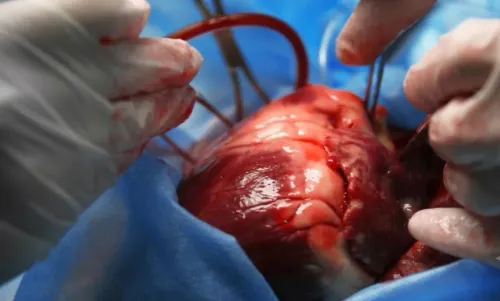
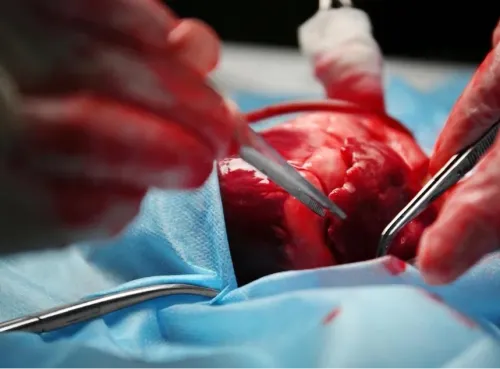
A beating-heart operation is not automatically safer. OPCAB avoids the heart-lung machine, which can reduce transfusion, acute kidney injury and respiratory complications, but positioning a moving heart makes precise grafting harder.
The ROOBY trial found lower graft patency and worse one-year composite outcomes with off-pump surgery; the CORONARY trial found similar major outcomes at five years but more repeat revascularisation after OPCAB.
| Option | What it means | Practical trade-off |
|---|---|---|
| OPCAB | CABG performed on a beating heart without the heart-lung machine | Less pump exposure, but technically demanding grafting and possible emergency conversion |
| On-pump CABG | The heart-lung machine supports circulation while the heart is stopped | A stable, still field for complex or diffuse disease, with pump-related risks |
| MICS CABG | CABG through smaller chest incisions, usually for selected vessels | An access method, not a guarantee of beating-heart surgery or lower overall risk |
| Completion angiography | Imaging graft flow before leaving the operating room | Detects a technical problem; it does not make an unsuitable graft plan suitable |
For a heart surgery hospital comparison, ask how often the team converts OPCAB to on-pump CABG and whether perfusion staff, a primed heart-lung machine and emergency ICU support are immediately available. Conversion can be urgent if the heart becomes unstable.
A planned minimally invasive operation can also be changed if exposure, vessel quality or the number and location of grafts make safety or complete revascularisation more important.
Ask an OPCAB hospital in Nagpur for recent, defined figures on:
- OPCAB conversion, stroke, kidney failure and reoperation-for-bleeding rates
- Isolated first-time CABG volume, separated from emergency cases and reoperations
- Unplanned repeat revascularisation and completion-angiography findings
Match the proposed operation to your coronary anatomy and health
OPCAB suitability depends on your coronary anatomy, medical stability and the team’s ability to change strategy safely. The surgeon must assess the number and location of blocked arteries, vessel size and quality, diffuse disease, previous bypass surgery, heart function, diabetes, kidney disease, lung disease and whether the operation is emergency or elective.
| Finding | May support OPCAB | May favour on-pump CABG or require caution |
|---|---|---|
| Coronary targets | Accessible vessels with clear grafting sites | Small, deeply placed or diffusely diseased vessels |
| Patient condition | Stable elective case with acceptable heart function | Shock, severe instability or difficult exposure |
| Medical history | Lower complexity and no major organ failure | Previous bypass, severe lung or kidney disease, or advanced heart failure |
Ask for a graft map, not just the label “beating-heart surgery.” It should state whether the left internal mammary artery will bypass the left anterior descending artery when suitable, which other arteries will receive arterial or vein grafts, whether complete revascularization is expected, and which targets are too small or diffuse for durable grafting.
A heart surgery hospital comparison should also test whether the plan remains safe if the surgeon converts to on-pump CABG.
- Which grafts are planned, and why?
- How will incomplete revascularization be handled?
- What finding would trigger conversion to the heart-lung machine?
- Will the surgeon explain graft flow or completion imaging when it is indicated?
Use defined outcome data instead of success-rate claims
Ask for the surgeon’s and unit’s own figures from the past 12 months, not a “high success rate.” Request:
- Number of isolated CABG operations and OPCAB operations
- OPCAB conversion-to-pump rate
- Perioperative death rate
- Stroke rate
- Kidney failure requiring dialysis
- Reoperation for bleeding
- Ventilation duration
- Unplanned repeat revascularisation within a stated follow-up period
Each figure needs a date range, numerator and denominator. “Two deaths” means little without knowing whether the hospital performed 50 or 500 operations.
| Figure to compare | Fair comparison | Warning sign |
|---|---|---|
| Death or stroke rate | Isolated, first-time CABG; elective and emergency cases separated | One rate mixing CABG, valve surgery and reoperations |
| OPCAB conversion rate | All attempted OPCAB cases, with the conversion definition stated | Conversions excluded from the OPCAB total |
| Kidney failure, bleeding and ventilation | Same time window and clear definitions | “Complication-free” without individual rates |
| Repeat revascularisation | Stated follow-up, such as 30 days or one year | No follow-up period |
| Surgical volume | Last-12-month isolated CABG and OPCAB counts | Total hospital operations only |
A beating heart bypass hospital in Nagpur or OPCAB hospital in Nagpur should explain whether results are crude or risk-adjusted, since diabetes, kidney disease, emergency status and reoperations change risk. Current NABH accreditation can confirm facility standards and scope, but it does not prove superior OPCAB outcomes.
Inspect the ICU, emergency backup, costs and follow-up before choosing
A low package price or short advertised stay does not prove good postoperative care.
To choose hospital for beating heart bypass surgery in Nagpur, verify that the operating complex can provide an urgent switch from OPCAB to on-pump CABG, with perfusion staff, a heart-lung machine and an ICU prepared for sudden low cardiac output or bleeding.
Ask for these details in writing before paying an advance:
- 24-hour intensivist coverage, invasive cardiac monitoring, blood-bank support and renal-replacement therapy.
- Immediate access to emergency interventional cardiology and reoperation for bleeding or graft problems.
- The expected ICU and total hospital stay, ventilation plan and blood-transfusion policy.
- The surgeon’s availability after discharge, emergency contact route and cardiac-rehabilitation schedule.
- An itemised estimate covering surgeon, theatre, ICU, medicines, investigations, blood products, complications and extra hospital days.
At a consultation with Dr K G Deshpande Memorial Centre, ask the team to put the planned grafts, intended technique and conversion plan on the treatment sheet rather than leaving them as verbal assurances.
| Check | Verify | Warning sign |
|---|---|---|
| Written plan | Operation, graft targets, alternatives and follow-up dates | Only a verbal proposal |
| ICU backup | 24-hour cover, dialysis, blood bank and reoperation access | ICU capability is unclear |
| Cost | Itemised estimate and exclusions | One unexplained package total |
| Recovery | Rehabilitation, medicines and surgeon contact | Discharge without scheduled review |
A bypass surgery centre in Nagpur should explain who manages complications after discharge, not merely quote its operating-room price.
Related product
 | Beating Heart Bypass Surgery / Completion Angiography MICS CABG / OPCAB / Small Incision Cardiac Surgery Valve Surgery Vascular Surgery Thoracic... View product → |
Frequently asked questions
What should you ask a hospital that offers beating heart bypass surgery?
Ask whether the team can switch from OPCAB to on-pump CABG immediately, with a perfusionist, primed heart-lung machine and advanced ICU support in the same operating complex.
How do OPCAB and on-pump CABG differ?
OPCAB grafts are performed while the heart continues beating, without the heart-lung machine. On-pump CABG uses cardiopulmonary bypass to support circulation while the heart is stopped.
What is MICS CABG, and is it suitable for everyone?
MICS CABG uses smaller chest incisions, but suitability depends on coronary anatomy, target vessels, prior surgery, lung function and the surgeon’s ability to provide complete grafting.
Which outcome data should you compare between bypass hospitals?
Request defined figures such as operative mortality, stroke, kidney injury, reoperation for bleeding, infection, ICU duration and readmission, along with the patient group and time period measured.
What costs and support should you check before choosing a bypass surgery centre in Nagpur?
Ask for an itemised estimate covering surgeon and hospital fees, graft materials, ICU care, blood products, medicines, complications, rehabilitation and follow-up visits.
Keywords