OPCAB involves much more than the grafting itself: your team must confirm that bypass is suitable, adjust medicines, prepare you for general anaesthesia and monitor you through a major chest operation. By following each stage from testing and admission to ICU care, discharge and rehabilitation, you can recognise what should happen and which questions require an individual answer from your surgical team.
Key takeaways
- Complete coronary angiography and risk assessment before admission.
- Follow your surgeon’s instructions for medicines, fasting and admission preparation.
- Expect ICU monitoring before transfer to the ward after OPCAB.
- Plan follow-up care around wound healing, activity and recovery milestones.
Before admission: tests, coronary mapping and medicine instructions
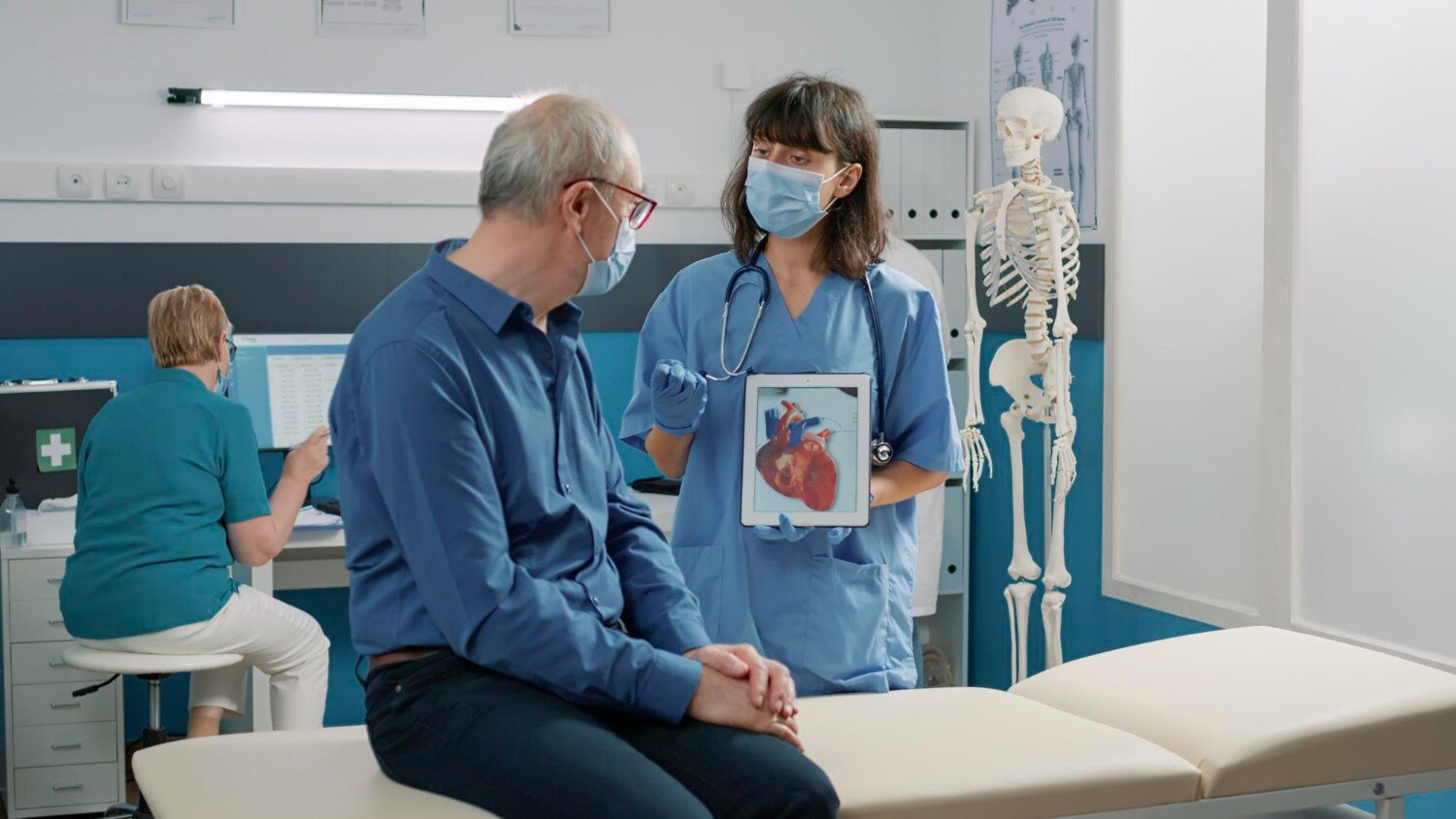
Before admission, confirm that bypass is anatomically suitable and that your medical risks have been assessed. A cardiologist in Nagpur reviews your symptoms, risk factors, coronary angiography and angiogram to identify blocked vessels and possible graft routes.
The cardiac surgeon then assesses target-vessel size and quality, diabetes, anaemia, lung disease, kidney disease, previous stroke, infection and frailty. These findings shape the OPCAB procedure steps in Nagpur.
- The usual checks include an ECG, echocardiogram, chest X-ray or other chest imaging, complete blood count, creatinine and other kidney-function tests, electrolytes, coagulation tests, blood group and cross-match.
- The team confirms whether kidney function can tolerate contrast already used during angiography and whether anaemia, infection or uncontrolled diabetes needs treatment before admission.
- The surgical and anaesthesia teams give your final medicine schedule. Aspirin is often continued or restarted, while clopidogrel, prasugrel, ticagrelor, warfarin and direct oral anticoagulants require timed interruption or a bridging decision.
- They also specify when to take diabetes medicines and blood-pressure medicines, including which doses to omit on the day of surgery.
Never stop an antiplatelet or anticoagulant independently, especially after a recent stent. The surgical and anaesthesia teams—not a generic internet schedule—decide what you take and when. Ask who to call if your symptoms, medicines or health change before admission.
Admission day: registration, preparation and general anaesthesia
On admission day for OPCAB in Nagpur, registration confirms your identity, planned operation and contact details. Staff check the consent form, allergies, fasting status, last medicine doses and recent test results.
1. A nurse reconciles every medicine, including aspirin, antiplatelets, anticoagulants, diabetes medicines and blood-pressure tablets. Follow the hospital team’s instructions for fasting and the timing of your last dose; do not change either independently.
2. Nurses or clinicians repeat selected blood tests or an ECG when results are outdated, unclear or needed for safety. They insert an intravenous line for fluids and medicines, check vital signs, and prepare you for transfer to the operating area.
3. General anaesthesia uses medicines that make you unconscious. After you are asleep, the anaesthesia team places a breathing tube to support ventilation and continuously tracks oxygen level, carbon dioxide, ECG rhythm, blood pressure, temperature and urine output.
An arterial line provides beat-to-beat blood-pressure readings and repeated blood samples. The team adds central venous access when medicines or circulation monitoring require it.
For selected patients, transesophageal echocardiography uses an ultrasound probe in the oesophagus to assess heart function, fluid status and new wall-motion changes during surgery. After these checks, the team confirms your identity and procedure again before proceeding.
Inside the operating room: how the beating-heart grafts are made
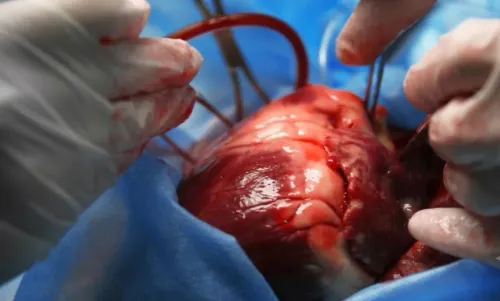
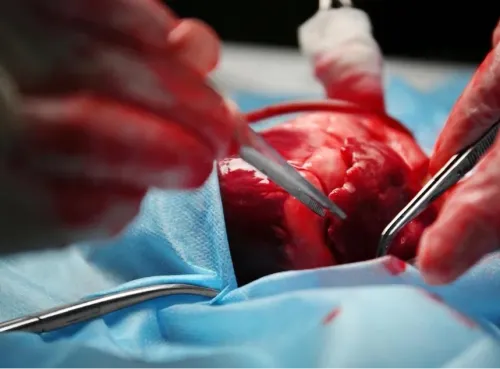
For beating-heart bypass surgery in Nagpur, the surgeon usually begins with a median sternotomy: the breastbone is opened to reach the heart. The team harvests conduits according to your angiogram and anatomy, such as the left internal mammary artery, radial artery or saphenous vein.
A stabilizer holds one small target area relatively still while the rest of the heart continues beating. The surgeon sews the conduit from the aorta or another arterial source to the coronary artery beyond the blockage, creating a route around the obstruction.
Lifting or positioning the heart can reduce blood pressure or cardiac output. The anaesthetist and surgeon respond with repositioning, medicines, stabilizers and temporary coronary shunts that preserve blood flow while each graft is sewn. Arterial pressure, oxygenation, ECG changes and heart function guide these adjustments.
OPCAB avoids the heart-lung machine, but it remains major open-heart surgery and is not automatically safer or suitable for every coronary anatomy.
| OPCAB | On-pump CABG |
|---|---|
| No heart-lung machine; heart keeps beating | Heart-lung machine circulates and oxygenates blood |
| Stabilizer and temporary shunt support grafting | Pump support permits a still, emptied heart |
| Requires suitable targets and haemodynamic tolerance | May help when exposure or stability is poor |
The team may convert to cardiopulmonary bypass for poor exposure, haemodynamic intolerance, difficult targets, bleeding or an inadequate graft result. Conversion protects safety or graft quality; it is an accepted rescue strategy, not proof that the original plan was wrong.
After surgery: ICU monitoring, ward transfer and discharge
After the operation, you go to a cardiac surgical ICU rather than directly to a ward. Staff continuously assess heart rhythm, blood pressure, oxygenation, bleeding, urine output, kidney function and neurological status.
1. Chest drains remove blood, fluid and air around the heart and lungs. A urinary catheter measures urine output accurately, while temporary pacing wires give the team a backup way to control the heart rate if a rhythm problem develops.
2. The breathing tube is usually removed after you are awake, warm and sufficiently stable. Ongoing bleeding, poor lung function or the need for circulatory support can delay removal. Once awake, you will be encouraged to cough, take deep breaths and use an incentive breathing device when provided.
3. Pain commonly comes from the sternotomy and chest drains. Take the prescribed analgesia; adequate pain control lets you breathe deeply, cough and move safely. Nurses and physiotherapists help you sit up and walk early, reducing lung complications and blood-clot risk.
4. Many uncomplicated patients move from ICU to a ward after about one to two days and leave hospital after about five to seven days. Bleeding, atrial fibrillation, infection, kidney injury, breathing problems, stroke, poor glucose control or slow mobility can extend opcab recovery.
5. Before discharge, confirm your medicine list, wound-care instructions, activity limits, follow-up appointments and emergency contact advice. Ask whom to call immediately for severe breathlessness, chest pain, fainting, heavy drain-site bleeding, fever, confusion or worsening wound redness.
After discharge: recovery milestones and choosing a Nagpur care pathway
Recovery after discharge takes weeks, not days. Lighter routine activity returns gradually, but a median sternotomy commonly needs roughly six to eight weeks for substantial bone healing. Avoid heavy lifting, forceful pushing and driving until the surgeon confirms adequate healing and control.
Cardiac rehabilitation combines monitored exercise with education, blood-pressure, diabetes and cholesterol management, smoking cessation, diet support and psychological care.
Seek urgent assessment for:
- Angina-like chest pain, severe breathlessness or fainting
- New neurological symptoms, persistent fever, wound separation or pus
- Sustained palpitations, rapidly worsening swelling, or sudden weight gain with breathlessness
Before choosing OPCAB in Nagpur, compare the complete care pathway rather than the label alone.
| Check | Ask directly | Why it matters |
|---|---|---|
| Team | Which cardiologist in Nagpur, cardiac surgeon and anaesthetist provide each part of care? | Named responsibility improves continuity and accountability. |
| Emergency capacity | Is a 24-hour cardiac-surgical ICU, blood-bank support and emergency conversion to on-pump bypass available? | Poor exposure, unstable circulation, bleeding or an inadequate graft result can require conversion. |
| Package scope | Are medicines, tests, ICU days, rehabilitation services and treatment of complications included? | A low quote can exclude essential recovery costs. |
For a private centre such as Dr K G Deshpande Memorial Centre, verify these details in writing. Surgeon-team experience, your coronary anatomy and the plan for possible on-pump conversion matter more than the OPCAB label alone.
Related product
 | EYE For a long time, the people of Central India felt a desperate need for a state-of-the-art tertiary eye care centre. View product → |
Frequently asked questions
What tests are needed before OPCAB admission?
Your care team reviews symptoms, risk factors, coronary angiography and angiogram findings to assess blocked vessels, graft routes and medical risks.
What happens on the day of OPCAB surgery?
You complete registration and surgical preparation before receiving general anaesthesia for the operation.
How are grafts made during beating-heart bypass surgery?
The surgeon creates bypass grafts while the heart continues beating, using mapped coronary targets and suitable graft routes.
What happens after OPCAB surgery?
You receive ICU monitoring first, then transfer to a ward when your condition allows, followed by discharge planning and recovery guidance.
Keywords