

Before an operation is scheduled, the team must confirm the heart defect, measure how it is affecting the child, and decide whether surgery is urgent, elective, or not the best first treatment. You will learn which history, examinations, scans, laboratory tests and risk reviews lead from the first referral to surgical clearance and admission.
Key takeaways
- Bring referral notes, previous scans, medicine lists and hospital discharge papers.
- Expect history-taking and examinations tailored to your child’s age and heart defect.
- Ask what each echocardiogram, ECG, blood test and scan is intended to answer.
- Confirm fasting, medicines, nutrition advice and admission instructions before surgery.
From referral to the first surgical decision
A referral does not automatically mean immediate surgery. The pediatric cardiology team confirms the heart defect, its physiology and the child’s current condition using the referral notes, prior imaging and examination.
How children are assessed before pediatric cardiac surgery in Nagpur depends on more than the diagnosis: age, oxygen saturation, ventricular function, pulmonary pressure, feeding and growth can change the timing.
The team treats the case as urgent when findings show that waiting could cause rapid deterioration, such as:
- Severe or worsening cyanosis, breathing difficulty or low oxygen saturation
- Poor feeding, dehydration, marked fatigue or signs of heart failure
- Duct-dependent circulation, serious rhythm disturbance or worsening ventricular function
- Pulmonary hypertension, acidosis or another sign of inadequate circulation
This pediatric cardiac surgery assessment may lead to emergency surgery, stabilisation before surgery, planned admission or catheter treatment instead. The team also checks for fever, respiratory illness, skin infection and untreated dental infection; these can postpone elective surgery, but not when the cardiac danger of waiting is greater.
The anaesthetist then reviews medicines, allergies, previous anaesthetic problems, airway concerns and recent cough or fever before confirming a safe next step.
The history and examination change with age
A newborn’s feeding, breathing and oxygen level can reveal serious heart disease before the child can describe symptoms. During a child heart surgery evaluation, clinicians collect the birth history, gestational age, birth weight, cyanosis, feeding difficulty, sweating, admissions, medicines, allergies, immunisations and family history.
| Age | Information collected | Examination focus |
|---|---|---|
| Newborn | Prenatal scans, delivery complications, prematurity, feeding, blue episodes and urine output | Oxygen saturation, breathing effort, pulses, heart sounds, perfusion, weight and signs of heart failure |
| Infant | Feeding duration, sweating, poor weight gain, recurrent chest infections, medicines and prior admissions | Growth chart, respiratory rate, saturation, pulse and blood pressure, liver enlargement, murmurs and breathing |
| Older child | Exercise tolerance, fainting, chest symptoms, school activity, infections and previous procedures | Height, weight, blood pressure, four-limb pressures when indicated, pulses, heart sounds, oxygenation and heart-failure signs |
| Teenager | Palpitations, exertional symptoms, menstrual history when relevant, medicines, adherence and mental-health concerns | Body size, blood pressure, rhythm, oxygen saturation, clubbing, cyanosis and signs of pulmonary hypertension |
The team also reviews airway difficulty, previous anaesthesia, recent cough or fever, neurological status, vascular access and fasting instructions. This age-specific examination guides pediatric cardiac care and helps decide whether an infection, poor nutrition or unstable physiology requires treatment before surgery.
What each scan, tracing and blood test answers
Each test earns its place by answering a specific question about the child’s anatomy, physiology or readiness for anaesthesia. In a pediatric cardiac surgery assessment, a normal result in one area does not rule out danger elsewhere.
| Test | Question answered |
|---|---|
| Echocardiogram | What defect is present, and how are the chambers, valves, blood flow and ventricular function affected? |
| Electrocardiogram | Is the rhythm normal, and are there signs of chamber enlargement or conduction problems? |
| Chest X-ray | What are the heart size, lung blood flow and signs of congestion or infection? |
| Pulse oximetry | Is oxygen saturation low at rest, and does it differ between limbs? |
| Complete blood count | Is there anaemia, infection, or a high haemoglobin or haematocrit caused by chronic low oxygen? |
| Blood group and cross-match | Which compatible blood is available if transfusion is needed? |
| Kidney, liver, electrolyte and glucose tests | Can the child tolerate anaesthesia, bypass medicines and postoperative treatment? |
| Coagulation tests | Is there a clotting abnormality that could increase bleeding? |
| Infection screening | Is an active infection likely to require treatment or delay elective surgery? |
| Cardiac catheterisation | When imaging leaves an important question, what are the pressures, oxygen levels, pulmonary vascular resistance, coronary anatomy or collateral vessels? |
For families comparing children heart surgery in Nagpur, catheterisation is not automatic; the team orders it when non-invasive tests cannot answer a decision-critical question or when catheter treatment is planned.
Confirming the anatomy and choosing the operation
A child heart surgery evaluation uses imaging and haemodynamic data to decide whether the child needs an operation, catheter treatment, or more information before either. Echocardiography maps chambers, valves, blood-flow pathways and ventricular function; CT or cardiac MRI adds detail about the aorta, pulmonary arteries, veins, collaterals and complex anatomy when ultrasound cannot show enough.
| Option | What the team needs to establish | Usual implication |
|---|---|---|
| Surgery | The defect, repairable anatomy, ventricular function, pressure load and timing | Plan the operation, bypass strategy and postoperative support |
| Catheter treatment | A suitable opening, narrowing, vessel or abnormal connection that can be closed, widened or stented safely | Treat without open surgery, or stabilise the child before surgery |
| Further investigation | Unclear anatomy, conflicting scans, unexplained low oxygen, or uncertain pulmonary pressure | Repeat or extend imaging; consider catheterisation |
Cardiac catheterisation is not automatic. The team selects it when non-invasive scans leave a decision-critical gap or when direct chamber pressures, oxygen saturations, pulmonary vascular resistance, coronary anatomy or collateral vessels are needed; the same procedure can sometimes provide treatment.
The final plan also considers age, weight, oxygen level, pulmonary hypertension, prior repairs and ventricular function. A second review is valuable for complex defects or high-risk operations, and good pediatric cardiac care includes confirming intensive-care and emergency support after the procedure.
Anaesthetic risk, nutrition and surgical clearance
Clearance means the child can safely undergo anaesthesia, postoperative ventilation and intensive care—not that every test is normal. This pre-anaesthetic review is a distinct step in pediatric cardiac care.
The anaesthetist checks the airway, prior anaesthetic problems, medicines, allergies, neurological status, vascular access and fasting plan, then considers whether the child depends on a particular preload, heart rate or oxygen saturation.
- A recent cough, wheeze or fever can postpone non-urgent surgery, especially in an infant or a child with airway disease.
- Weight is recorded for drug doses, fluids, anaesthesia and cardiopulmonary-bypass calculations.
- The team assesses breathing, oxygen saturation, circulation, kidney function and the ability to tolerate intensive care.
- The cardiac unit confirms blood-bank access, pediatric cardiac anaesthesia, perfusion and intensive-care cover before admission.
Nutrition can change the timing and safety of surgery. Heart failure, high metabolic demand or swallowing difficulty can cause undernutrition; clinicians may add calorie-enriched feeds, treat iron deficiency or arrange tube feeding.
Families asking how children are assessed before pediatric cardiac surgery in Nagpur should also ask how the centre manages ventilation, arrhythmia, bleeding, kidney injury, infection and reoperation after surgery. Clearance follows that complete plan, not a single signature.
What families should verify before admission in Nagpur
Ask for the names and roles of the pediatric cardiologist, surgeon, cardiac anaesthetist, perfusionist, intensivist, blood-bank contact and imaging team. Ask how children are assessed before pediatric cardiac surgery in Nagpur, including who makes decisions overnight and who leads emergency escalation.
Use the same questions at every hospital:
- What is the precise defect, proposed operation and alternative, including catheter treatment?
- How urgent is surgery, and what could happen if it is delayed?
- How long are ICU care and ventilation expected to last?
- How will the team manage bleeding, arrhythmia, kidney problems, infection and possible reoperation?
- What blood products, transfusion policy and total estimated cost apply?
- Who provides cardiology follow-up, and for how long?
Question | Hospital 1 | Hospital 2 Pediatric cardiac ICU | 24-hour intensivist and emergency surgical backup | Second opinion | Echocardiogram and operative plan reviewed for complex or repeat surgery | Pre-admission clearance | Infection, vaccination, nutrition, airway, medicines and fasting reviewed | Postoperative rescue | Written plan for ventilation, bleeding, arrhythmia and kidney support |
A second review is especially valuable after a previous repair or before high-risk surgery. Families comparing children heart surgery in Nagpur can use this worksheet at Dr K G Deshpande Memorial Centre and any other centre, then compare specific answers rather than reputation alone.
Related product
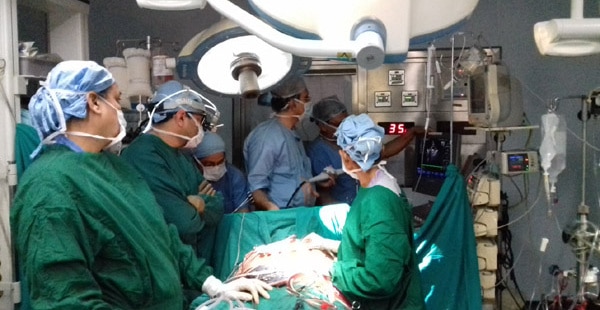 | Beating Heart Bypass Surgery / Completion Angiography MICS CABG / OPCAB / Small Incision Cardiac Surgery Valve Surgery Vascular Surgery Thoracic... View product → |
Frequently asked questions
What happens before a child is referred for cardiac surgery in Nagpur?
The pediatric cardiology team reviews referral notes and previous imaging, examines the child, confirms the heart defect and assesses the child’s current condition before making a surgical decision.
How does a child’s age affect the heart surgery assessment?
Doctors adapt the history and examination to the child’s age, development, symptoms, feeding pattern, activity level and ability to describe problems.
What tests are used to assess a child before cardiac surgery?
The assessment can include echocardiography, an electrocardiogram, imaging scans and blood tests. Each test answers a different question about anatomy, heart function, oxygen levels or surgical readiness.
How do doctors choose the operation for a child with a heart defect?
They confirm the heart’s anatomy and physiology, review the child’s condition and match those findings with the safest appropriate operation.
What should families check before admission for pediatric cardiac surgery?
Confirm the operation plan, anaesthetic review, fasting instructions, medicine changes, nutrition advice, required reports and the date and time of admission.
Keywords