
Older age alone does not decide whether beating-heart bypass is appropriate. The safer choice depends on coronary anatomy, frailty, organ function, independence, surgical expertise and the patient’s goals, so you need more than a chronological-age cutoff before choosing an operation.
Key takeaways
- Age alone does not rule out beating-heart bypass surgery.
- Assess frailty, kidney function, lung health and independence before choosing surgery.
- Avoiding the heart-lung machine may reduce selected risks, but not for every patient.
- Ask why off-pump or on-pump CABG best fits your coronary anatomy and health.
Does age alone rule out beating-heart bypass surgery?
No: chronological age alone does not rule out beating-heart bypass surgery. Bypass surgery for older patients should be judged by physiological reserve—the ability to withstand major surgery and recover—and expected benefit, not by a birthday. Two people of the same age can have very different risks because their strength, organ function and independence differ.
A useful assessment looks at:
- Frailty signs, including unintentional weight loss, weakness, exhaustion, slow walking, low physical activity and reduced mobility.
- Cognition, previous stroke and the ability to understand treatment choices.
- Anaemia and nutrition, which can delay healing and rehabilitation.
- Diabetes, lung disease and kidney disease, including how well each condition is controlled.
- Independence in daily activities, such as bathing, dressing, walking, preparing food and managing medicines.
The discussion should cover more than death, heart attack and stroke. Ask about delirium, prolonged ventilation, loss of independence, rehabilitation needs and the likely discharge destination. An older person with good mobility, clear cognition and strong organ function may recover better than a younger person with severe frailty.
Conversely, marked frailty can make recovery difficult even when the bypass technically succeeds, so the heart team may consider conventional surgery, PCI or medical treatment against the person’s goals.
What does the preoperative assessment need to show?
It needs to show whether bypass is technically achievable and whether the patient has enough physiological reserve to recover. The heart team uses these findings to choose off pump bypass surgery, conventional CABG, PCI or medical treatment.
1. Review the coronary angiogram. Confirm whether each vessel offers a usable graft target, whether disease affects one artery, several arteries or the left-main artery, and whether narrowing is diffuse, heavily calcified or technically difficult. Small vessels, poor targets and diffuse disease can make complete grafting unreliable.
2. Measure heart function with echocardiography. Record the left-ventricular ejection fraction and assess valve disease, chamber size and any regional wall-motion abnormality.
3. Check blood tests. Creatinine and estimated glomerular filtration rate describe kidney reserve; haemoglobin identifies anaemia; HbA1c shows diabetes control. These results affect contrast exposure, bleeding risk, medication choices and recovery planning.
4. Assess the person, not only the arteries. Document lung function, previous stroke, current medicines, nutrition, walking speed, cognition and independence in bathing, dressing, eating and managing medicines. A slow walk, weight loss or impaired memory can change the expected benefit even when the angiogram looks operable.
5. Confirm who will make the decision. The cardiac surgeon assesses grafting and operative feasibility; the cardiologist for older adults in Nagpur coordinates the cardiac and medical review; the anaesthetist evaluates airway, lungs and haemodynamic risk; a geriatrician or medical specialist assesses frailty, cognition and independence.
Ask which specialists actually participate locally rather than assuming a complete heart team.
The final discussion should state the expected benefit, the recovery burden and what happens if off-pump positioning is not tolerated. Ask whether a less invasive or non-surgical strategy meets the patient’s goals.
When can avoiding the heart-lung machine help an older adult?
Off-pump bypass surgery may offer a meaningful advantage when an older adult has a heavily calcified ascending aorta or a condition that increases vulnerability to cardiopulmonary bypass, such as severe kidney or lung disease. Reducing pump use and aortic manipulation can limit pump-related stress and embolic exposure.
Selected studies report lower rates of bleeding, transfusion and acute kidney injury, but these findings do not guarantee safer surgery or better long-term survival for every patient.
Kidney injury can still result from:
- Low blood flow during surgery
- Blood loss
- Inflammation
- Contrast exposure during angiography
- Medication effects
Operating on a moving heart is technically demanding. Positioning the heart to reach different coronary arteries can cause sudden, dangerous changes in blood pressure or cardiac output, and the team may need to convert to the heart-lung machine. Difficult or diffuse coronary targets can also lead to less complete grafting.
Avoiding the pump does not eliminate stroke risk because embolic events and low blood pressure can still injure the brain. The best approach depends on the aorta, coronary anatomy, kidney reserve and the surgeon’s ability to achieve durable, complete grafting—not on the operation’s label alone.
When is conventional on-pump CABG the better choice?
Conventional on-pump CABG can be the better choice when the surgeon needs time, stability and reliable access to several difficult coronary targets. Multivessel or left-main disease, diabetes, reduced ejection fraction, heavily calcified coronary arteries, diffuse narrowing, small vessels or previous stents can make complete grafting more important than avoiding the heart-lung machine.
| Option | What it means | When it may fit |
|---|---|---|
| Conventional CABG | The heart is stopped and a heart-lung machine maintains circulation during grafting. | Complex anatomy, multiple grafts, difficult targets or a need for precise, complete revascularisation |
| OPCAB | Bypass grafts are created on a beating heart without using the pump. | Selected patients when pump exposure or aortic manipulation presents a greater risk |
| MICS CABG | CABG performed through smaller chest incisions. | Suitable anatomy and an experienced team; it describes access, not pump use |
| Hybrid revascularisation | A surgical graft is combined with PCI, such as a coronary stent. | Different blockages require different treatments |
| PCI or medication | A catheter-based stent, medicines, or both, without bypass surgery. | Anatomy, symptoms, life expectancy or personal goals make surgery a poor match |
OPCAB and MICS CABG are not interchangeable: one describes pump avoidance, the other describes the incision. Prior surgery, prior stents, symptoms despite medication, expected lifespan and the surgeon’s OPCAB experience also shape the decision.
Beating heart bypass surgery in Nagpur is not automatically safer simply because the heart keeps beating; the best plan for beating heart bypass surgery for older adults in Nagpur is the one that offers durable blood flow with acceptable effects on independence and recovery.
What should you ask a Nagpur heart team before deciding?
Ask a Nagpur heart team for surgeon-specific results, not a promise attached to “beating heart.” For beating heart bypass surgery in Nagpur, compare the available paths directly:
| Option | What it means | When it applies |
|---|---|---|
| OPCAB | Bypass grafting without planned heart-lung-machine use | Suitable targets and an older adult likely to tolerate positioning |
| On-pump CABG | Bypass with the heart-lung machine | Complex disease or a need for complete, technically reliable grafting |
| PCI or medication | Stents, or symptom and risk control without surgery | When anatomy, frailty or personal goals make surgery unsuitable |
Ask the surgeon and a cardiologist for older adults in Nagpur:
- How often do you perform OPCAB in high-risk older adults?
- What are your recent risk-adjusted rates for conversion to the pump, stroke, kidney injury, transfusion and incomplete revascularisation?
- How often do you use an internal mammary artery graft, and what graft plan fits this anatomy?
- Can your ICU manage prolonged ventilation, kidney support, delirium and other older-patient complications?
- What rehabilitation, caregiver support and discharge destination should we expect?
Ask what benefit the operation is expected to deliver, and what happens if the heart cannot tolerate off-pump positioning. Ask whether PCI or medication could meet the patient’s goals.
For someone consulting Dr K G Deshpande Memorial Centre, these questions turn a local service choice into an individual assessment. Choose the approach that offers durable revascularisation with an acceptable effect on independence and recovery.
Related product
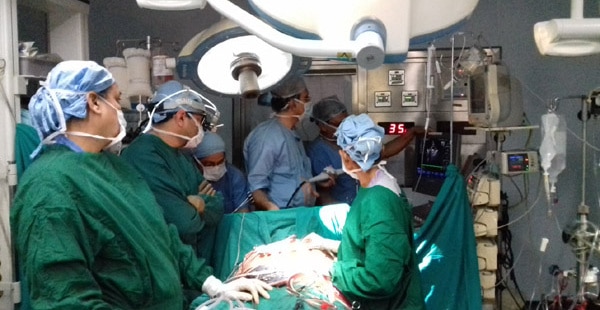 | Beating Heart Bypass Surgery / Completion Angiography MICS CABG / OPCAB / Small Incision Cardiac Surgery Valve Surgery Vascular Surgery Thoracic... View product → |
Frequently asked questions
Does age alone rule out beating-heart bypass surgery?
No. Doctors assess physiological reserve, organ function, independence, coronary anatomy and expected benefit rather than age alone.
What should preoperative assessment show before bypass surgery for older patients?
It should assess frailty, mobility, cognition, kidney and lung function, nutrition, other illnesses, medications and the complexity of coronary disease.
When can avoiding the heart-lung machine help an older adult?
Off-pump bypass surgery can be useful when avoiding cardiopulmonary bypass fits the patient’s anatomy and reduces concerns about complications linked to the heart-lung machine.
When is conventional on-pump CABG the better choice?
On-pump CABG is often preferred when several arteries need grafting, the coronary anatomy is complex, the heart needs more extensive work or complete revascularisation is difficult off pump.
What should you ask a Nagpur heart team before deciding?
Ask about the recommended technique, graft plan, surgical experience, personal risks, recovery expectations and why the proposed approach suits your anatomy and overall health.
Keywords